







SCHOOLS AND EDUCATION · THE EMERGENCY CLASSROOM RESET PROTOCOL
Cracking the Hard Class
For the class where your usual behaviour management has stopped working. A structured, 12-module protocol that resets the room by rebuilding belonging, not by adding more consequences.
A hard class is not a room full of hard kids.
Hard classes show the same patterns: volatility, disruption, disengagement, peer contagion and low belonging. Plans, referrals and consequences target individuals, but the class generates behaviour socially. It works like a shared nervous system, and that system can be reset.
Energy goes to self-protection
- Students scan each other before they scan the task
- Reactivity is high and spreads fast
- Consequences and reward charts get absorbed by the group
Energy goes to learning
- Students focus on the work
- Reactivity drops across the room
- Individual supports finally have room to work
The protocol adds a collective layer beneath your existing behaviour policy. It does not replace individual plans. It makes them workable.
Built for the class you dread on a Monday.
This is for you if…
- You have a class where your usual strategies have stopped working
- You teach in a high-adversity mainstream setting, from early childhood to upper secondary
- You want a sequenced protocol with tools you use in the room, not more theory
- You are building Tier 1 classroom systems and need something that works this term
This is not the right fit if…
- You want a reward chart or a list of consequences
- You need a clinical or specialist-setting program (adaptations will be needed)
- You are looking for a replacement for safeguarding or individual referral processes
Three parts. Twelve modules. One reset.
Each module pairs a short video with a practical artefact. The artefacts are tools for the classroom, used in sequence, not a book to read.
Modules 1–3. Understand why the class became hard and why typical systems fail.
Why Hard Classes Happen
Score your class across four clusters: the room, the students, your strategies and you. Find out where it sits on the fragmentation scale.
The Classroom as a Nervous System
Shift from individual misbehaviour to social patterns. Learn to read what your class is practising.
Individual vs Collective
Why each frame fails on its own, and when to use the individual frame, the collective frame, or both.
Modules 4–8. Build the five layers of the intervention: reinforcement architecture, language, design, ecology and reset.
Reinforcement Architecture
Choose a visible social anchor (marble jar, progress meter, digital tally) that makes shared progress visible. An anchor, not a reward.
Language
Replace generic praise with specific, immediate, collective reinforcement. Move from "you" to "we".
Design and Calibration
Calibrate the mechanism to your stage. Run the Four Questions Test and, for secondary, the Dignity Check.
Reward Ecology
Frame challenges that carry more dignity than rewards, like "50 strong transitions". Use data for collective wins, never as a punishment record.
The Reset
Bring the layers together into one reset plan, with clear phases and the indicators that show it is working.
Modules 9–12. Run the reset, troubleshoot it, then fade it out so the class holds on its own.
Launch Day
Pre-flight checks, scripts and staged moves. Set achievable first wins and reinforce them immediately and visibly.
Monitoring the Shift
Daily self-checks and diagnostics every 2–3 weeks across regulation, belonging, internalisation and identity.
Troubleshooting Wobbles
The cynical student, sabotage, the plateau and teacher fatigue. Wobbles are system tests, not failures.
Handing the Room Back
A four-week fade: confirm readiness, reduce cadence, hand over the language, retire the mechanism.
The five-part reset.
Grounded in Bronfenbrenner, Sherif's Robbers Cave study, self-determination theory and collective efficacy. Motivation shifts from tokens to shared identity and pride.
A visible collective container
One shared mechanism the whole class can see filling.
Clear, taught expectations
The behaviours that move the class forward, named and practised.
Frequent reinforcement
Specific, immediate and collective. Plain language, not gushing.
A shared class goal
Something the class achieves together, within reach early.
A collective celebration
Success marked clearly, so it becomes part of the class story.
Know where your class sits before you act.
The Fragmented Classroom Diagnostic scores your class from 0 to 28 across four clusters.
- Your score sets your starting point and next steps
- Reassess after Week 2
- Watch the direction of change, not the exact number
Same protocol. Different texture.
The protocol is calibrated to the developmental stage of your class, with stage-matched templates.
Early Childhood
- Mechanism
- Tactile, hands-on
- Pace
- Rapid reinforcement
- Tone
- Warm
- Goals
- Measured in days
Primary
- Mechanism
- Visible accumulation
- Pace
- Frequent, visible wins
- Tone
- Playful
- Goals
- Measured in weeks
Secondary
- Mechanism
- Subtle, status-based
- Pace
- Low-key, frequent
- Tone
- Dry, matter-of-fact
- Goals
- Measured in weeks
Meet Stuart McKenzie
Stuart is a registered psychologist and former teacher who has spent more than 30 years working with students, teachers and leadership teams in schools, including as a lead school psychologist.
He is the author of The Science of Teacher Resilience and co-founder of RSO Partners. This protocol is what he gives teachers when a class needs help now, while the broader Tier 1 system is being built.

A class that holds without you holding it.
Success is not a quieter room for a fortnight. It is a class that says "we" and "our class" unprompted, reinforces itself, orients new students and bounces back from a bad day.
Adds to your policy
Sits beneath your existing behaviour policy. Keep individual plans and referrals running alongside it.
Safeguarding comes first
Serious incidents always get an immediate individual response. The protocol never delays that.
Know its limits
Designed for high-adversity mainstream classrooms. Trauma and mental health needs may require extra support.
Ready to reset your hardest class?
Talk to us about access for yourself, your team or your whole school.
Enquire now →01
Meet Stuart McKenzie
I’m Stuart McKenzie, a consultant psychologist with 30 years in public schools, and I work alongside my wife Tina, an early childhood teacher.
My Mission? Helping primary school teachers turn chaotic, high-adversity classrooms into structured, thriving learning spaces with strategies that really work.
02
Is this right for me?
This Is Your Journey IF…
You feel overwhelmed by constant disruptions and stress in your classroom but don’t know where to turn for real solutions.
You want step-by-step strategies that actually work with high-adversity students, not just empty theories.
You’re ready to build confidence, control, and calm in your classroom so teaching feels good again.
What you'll receive:
You think chaotic classrooms are normal and see no need to change them.
You don’t want to put effort into applying tested strategies and proven systems.
You’re unwilling to receive guidance or try new approaches tailored to your classroom challenges.
03
What you'll experience
Over 10 transformative weeks, we'll journey through:
module 1:
Understanding Classroom Adversity
Identify your classroom’s biggest stressors and learn to tackle challenges at their root.
In this breakthrough session you'll:
Identify key stressors in your classroom and what’s causing them.
Break down real scenarios to pinpoint classroom challenges.
Use guided video analysis to clarify your unique adversity landscape.
module 2:
Foundations of Effective Classroom Practice
Build solid routines and systems that reduce chaos and create structure that sticks.
By the end of this session, you will:
Create consistent routines to calm your classroom chaos.
Build foundational systems using templates and checklists.
Set up processes that make daily transitions smoother.
module 3:
Behaviour Hotspots and Triggers
Pinpoint disruptive moments before they escalate and keep your classroom calm.
In this module, you will:
Track disruptive moments and patterns before they escalate.
Spot behaviour triggers with clear protocols and intervention plans.
Proactively manage disruptions to keep lessons flowing smoothly.
module 4:
Positive Reinforcement and Motivation
Drive student engagement and encourage expected behaviours using rewards and praise.
In this module, you will:
Use praise and rewards to encourage positive student actions.
Build engagement with clear motivational strategies.
Develop a classroom atmosphere that fosters improvement.
module 5:
Precision Communication with Students
Strengthen clarity and reduce conflicts so students understand and follow instructions.
During this module, you will:
Improve student understanding with simple and clear communication ladders.
Reduce conflicts by setting clear boundaries and listening actively.
Strengthen connection and compliance with refined communication methods.
module 6:
De-escalation and Crisis Response
Handle stress-filled situations quickly and confidently while maintaining control.
This powerful session teaches you to:
Apply rapid response steps to calm severe disruptions quickly.
Protect your well-being with simple reflection tools during crises.
Restore order to your classroom during tense situations effectively.
module 7:
Data-Driven Decision Making
Use measurable strategies to monitor progress and make smarter teaching choices.
This module focuses on helping you:
Collect data that shows clear progress in behaviour and routines.
Set measurable goals to improve accountability and make confident decisions.
Monitor class performance with tools to sustain long-term results.
module 8:
Stakeholder Engagement
Collaborate better with families and staff to create impactful classroom support.
This module is designed to help you:
Build stronger relationships with parents and staff using clear communication.
Create feedback loops that increase support for your teaching methods.
Collaborate for long-term student success with consistent input from stakeholders.
module 9:
Building Teacher Confidence and Resilience
Boost your confidence, reduce burnout, and find more joy in your teaching career.
Together in this session we'll:
Strengthen your confidence so you worry less in tough classroom moments.
Protect your well-being with simple reflection tools during crises.
Prevent burnout by creating support systems for personal well-being.
module 10:
Sustaining Success and Personal Growth
Prepare for lasting success with tools to maintain positive changes and keep growing.
In this session, you’ll focus on:
Outline future goals to maintain the progress you’ve achieved.
Use personalised plans to prevent regression and keep growing.
Track success with accountability steps that ensure goals stick.
04
The B-IQ Approach
STEP 1
ASSESS
Pinpoint classroom stressors and obstacles with personalised evaluations.
STEP 2
APPLY
Learn and use clear, proven evidence-based strategies tailored to your unique challenges.
STEP 3
ADVANCE
Strengthen skills through personalised plans to create lasting results.
Additional resources

The Engineered Classroom: Regulated by Design™ 7-part Course for educators and schools

Download your free digital guide
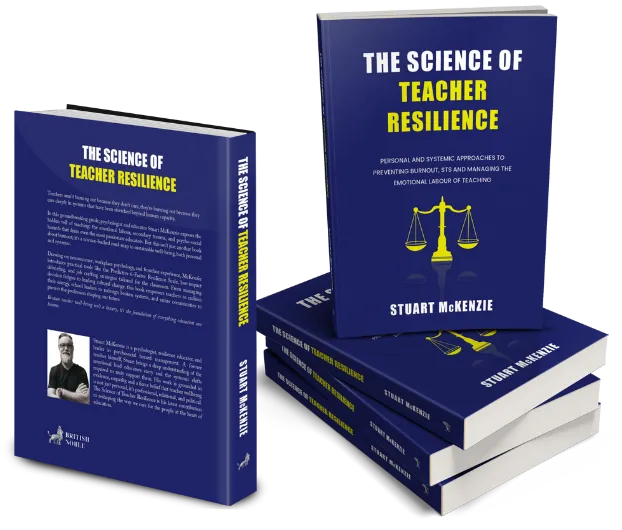
Read The Science of Teacher Resilience
Read the Behaviour Intelligence blog
Ready to get started?
Tell us what your organisation is facing. We will help you choose a practical first step, whether that is a workshop, a risk planning consultation, leadership support or an online resource.

Practical psychology for safer systems, stronger people and more resilient workplaces


Quick Links
Find a Course
Resources