







The Engineered Classroom: Regulated by Design™
download your free digital guide
By clicking the button below, you consent to Behaviour Intelligence and partners to use automated technology, including pre-recorded messages, mobile phone texts and email to contact you at the number and email address provided. This includes if the number is currently on any Do Not Call lists. This consent is not required to make a purchase.
01
Behaviour was never the root problem
Here’s the uncomfortable truth:
Most classroom behaviour instability is not a discipline failure.
It is an installation failure.
What presents as defiance, disrespect, or disruption is often the predictable output of an unengineered environment.
Behaviour escalates when:
Regulation is not designed into openings and transitions
Routines have not been explicitly installed and practised
Feedback systems lack consistency
Cognitive load exceeds student capacity without responsive adjustment
Expectations are implied rather than operationalised
Attention has no structured anchor
Instruction is layered onto instability
02
In R³ terms:
Layer 1 was not secured.
Layer 2 was not embedded.
Layer 3 was asked to compensate.
When these layers are installed in sequence, behaviour stabilises earlier.
Transitions tighten.
Teacher vigilance drops.
The room begins to regulate itself.
Calm is not a personality trait.
Calm is a system output.
When we treat behaviour as a student problem, we chase symptoms.
When we treat it as a design problem, we install stability.
Regulation First.
Routines Second.
Instruction Rides on Top.
Additional resources

The Engineered Classroom: Regulated by Design™ 7-part Course for educators and schools
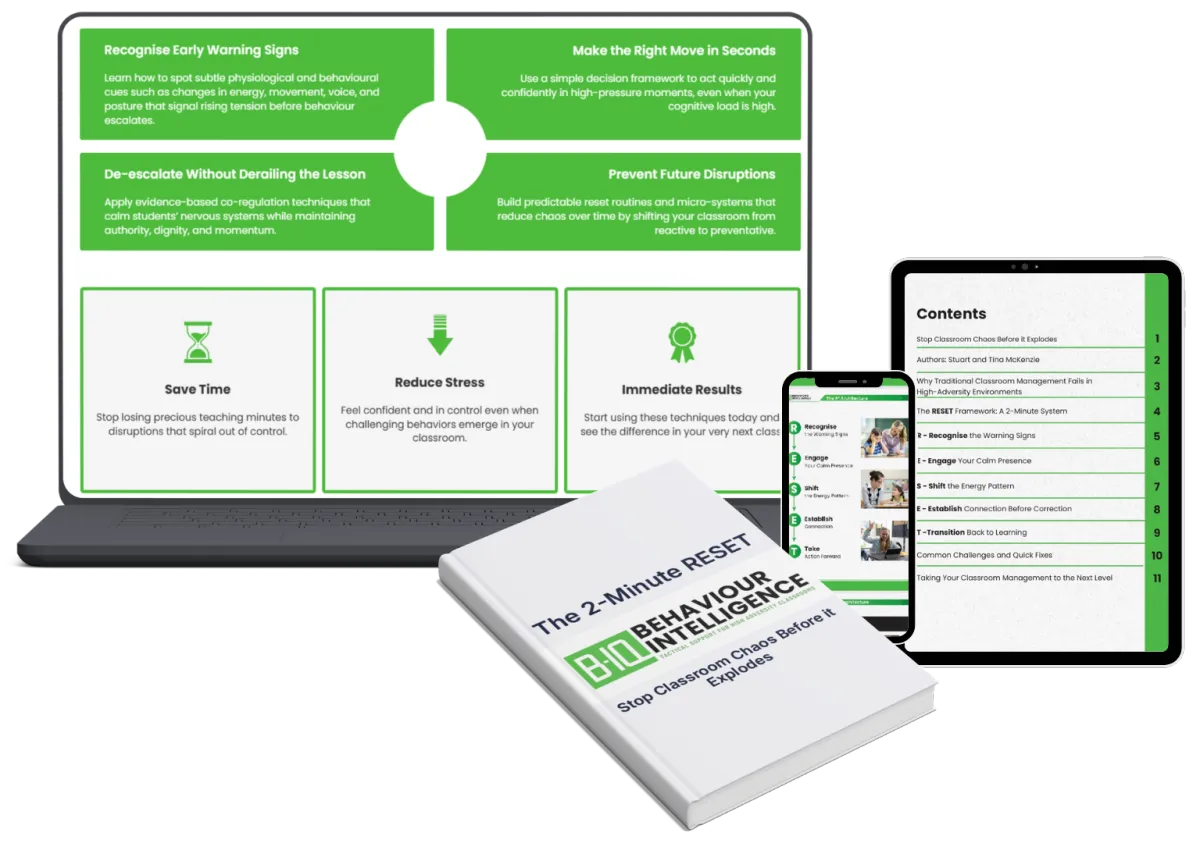
The 2-Minute RESET:
Stop Classroom Chaos Before It Explodes
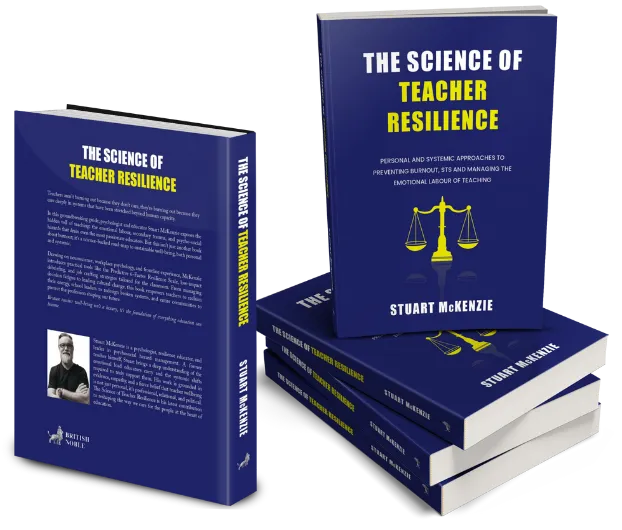
Read The Science of Teacher Resilience
Read the Behaviour Intelligence blog
Ready to get started?
Tell us what your organisation is facing. We will help you choose a practical first step, whether that is a workshop, a risk planning consultation, leadership support or an online resource.

Practical psychology for safer systems, stronger people and more resilient workplaces


Quick Links
Find a Course
Resources